The Language of Natural Plaster
Lime plaster breathes, cracks honestly, and ages the way skin does — which is exactly why designers are returning to it.
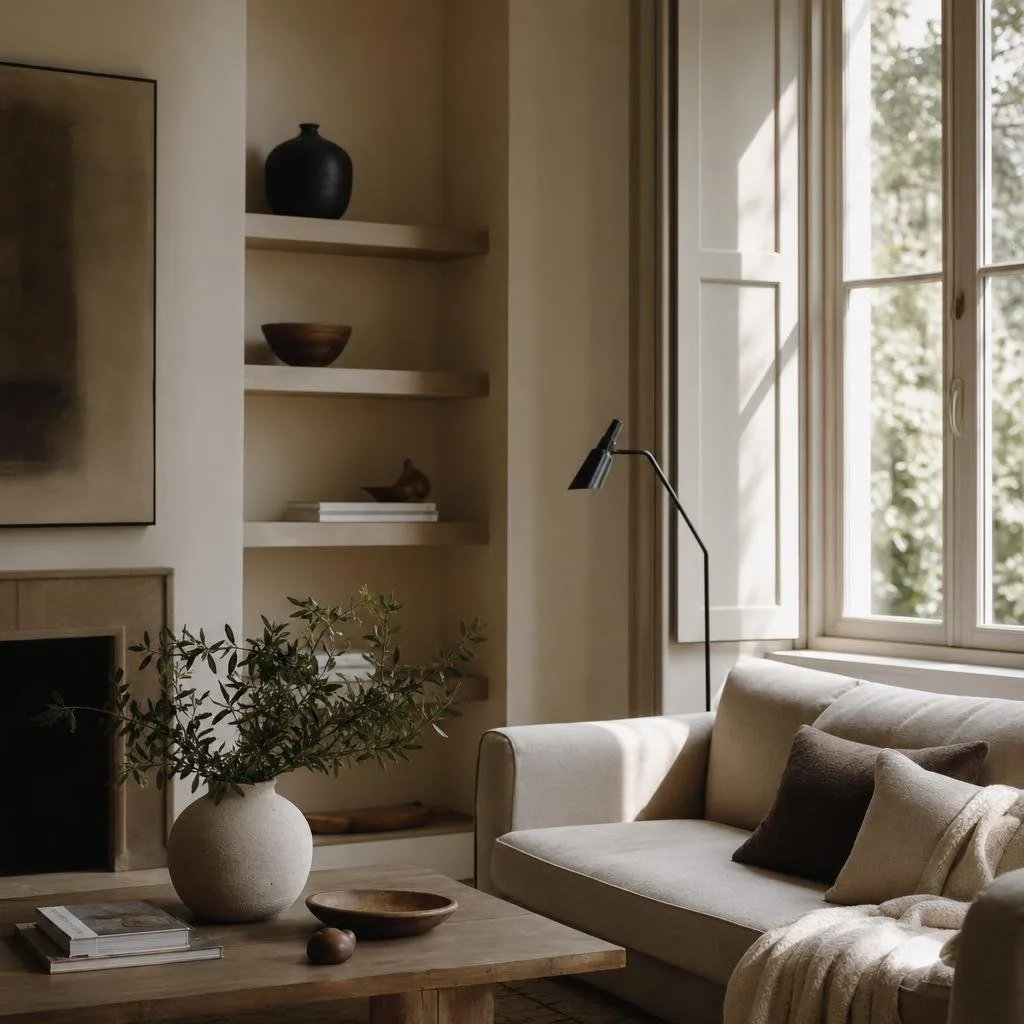
Drywall was invented to make walls fast, cheap, and forgettable, and for most of the last century it succeeded at all three. Lime plaster does none of those things well, which is precisely why it has been quietly reappearing in the homes of people who can afford to be patient. A skilled plasterer needs three to five days to finish a single room properly, applying two or three coats by hand and letting each one cure before the next goes on. The result is a wall with faint, irregular texture — the trace of a trowel moved by a human arm rather than a machine — that catches light differently depending on the hour.
The material itself is almost absurdly simple: lime, sand, water, sometimes a binder like animal hair or hemp fiber for structural coats. What makes it behave so differently from gypsum board is chemistry. Lime plaster cures through a slow reaction with carbon dioxide in the air, a process called carbonation that can continue for years after application, gradually turning the surface back into a form of limestone. Because the wall stays porous throughout that process, it absorbs and releases moisture from the room, which is part of why old plaster houses in humid climates tend to feel less clammy than their drywall-finished neighbors.
That porosity comes with a tradeoff that makes some homeowners nervous: lime plaster develops fine hairline cracks as the house settles, and unlike drywall, those cracks are not hidden by a skim coat of joint compound and paint. Plasterers who work in the material will tell you the cracking is not a defect to be prevented but a characteristic to be planned around — the same way a leather bag is expected to crease at the fold. Walls finished in true lime plaster are also notoriously difficult to patch invisibly, which means the material rewards builders who get it right the first time and disciplines the ones who do not.
Cost is the honest reason most new construction still reaches for drywall. A lime-plastered room can run three to five times the price of a comparable drywall finish, once labor is factored in, and the pool of plasterers trained in the traditional multi-coat method is small and shrinking. Several of the tradespeople interviewed for this piece learned the craft from a relative rather than a trade school, and all of them described a steady trickle of younger apprentices in the last five years, drawn less by the wages than by the appeal of a skill that cannot be automated.
What you get for the premium is a wall that behaves like a living surface rather than a sealed one. Sunlight moves across it differently through the day, the color deepens subtly with age the way old paper does, and repairs — when they are needed — are visible in a way that feels less like damage and more like a signature. It is not a practical choice for every room, and no one interviewed for this piece recommended it for a rental property. But for the room you actually spend your evenings in, several designers argued it is the single material upgrade most likely to be noticed by someone who cannot say exactly why the room feels different.