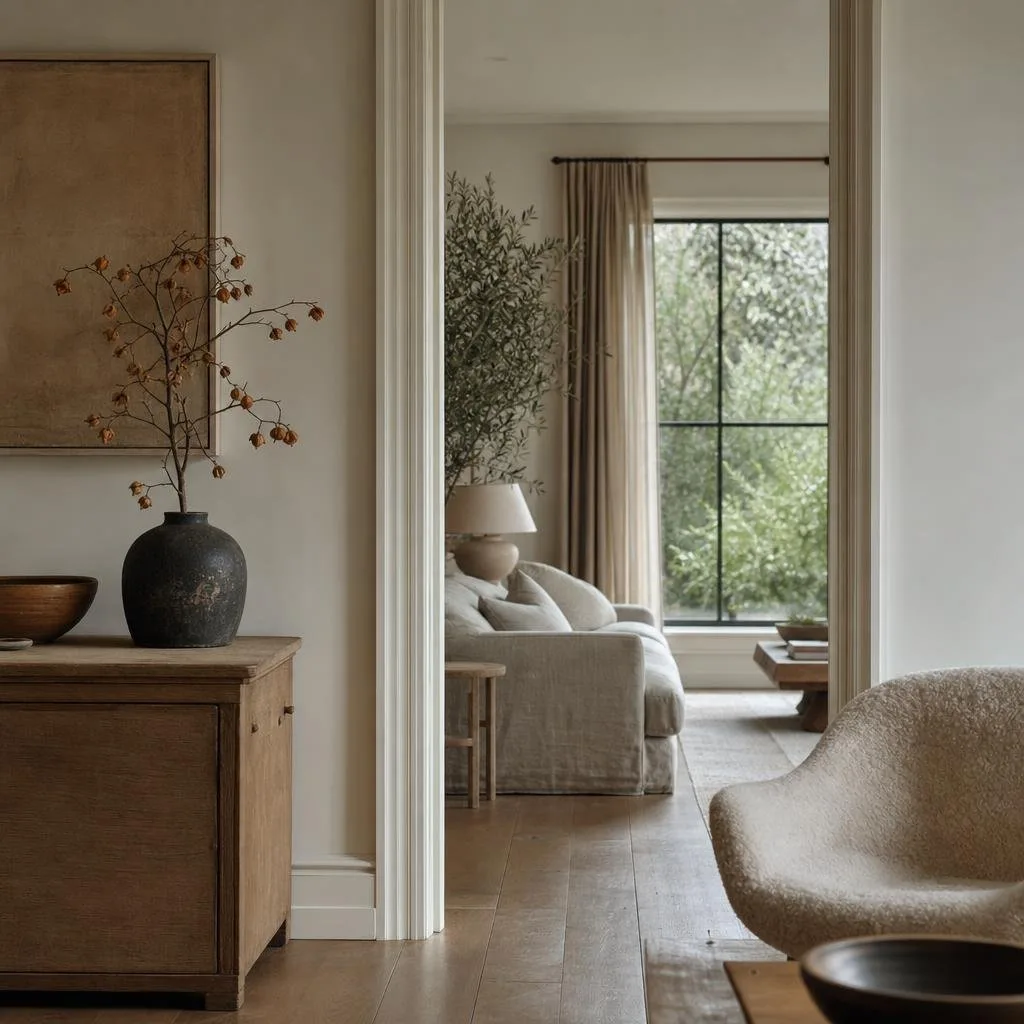
Inside a Reclaimed Farmhouse on the Hudson
A couple spent four years restoring an 1830s farmhouse plank by plank, and learned that patience is a design material too.
When Mara and Theo Lindqvist first walked through the front door of the farmhouse, the real estate agent apologized for the smell before she said anything about the layout. Water had been getting into the north wall for at least a decade, the plaster had given up on three of the four bedrooms, and a previous owner had covered the original wide-plank floors with sheet vinyl printed to look like tile. Most buyers who toured the house that spring left within ten minutes. Mara and Theo stayed for two hours, mostly on their knees, prying up corners of vinyl to see what was underneath.
What was underneath, it turned out, was chestnut — a wood that has been functionally extinct in American lumber since blight wiped out the trees in the early twentieth century. That discovery reframed the entire project. Instead of gutting the house and starting over, which would have been faster and considerably cheaper, they decided to work room by room, saving everything that could be saved and replacing only what could not. The floors were sanded by hand rather than machine, because a drum sander would have taken the irregular saw marks off boards that were cut sometime before the Civil War, and those marks were exactly the point.
The kitchen took the longest. The original hearth, five feet wide and built from fieldstone pulled from the property itself, had been bricked over and hidden behind a 1970s range hood. Reopening it meant rerouting gas and electrical service around a chimney that had not drawn air in fifty years, and rebuilding a section of flue by hand with a mason who specializes in historic hearths. Today the hearth anchors the room, flanked by a plaster range hood the color of wet sand and open shelving built from the same chestnut as the floors, milled from a section of joist that could not be saved in place.
What the Lindqvists will tell you, if you ask, is that the house taught them to stop treating imperfection as a problem to solve. A door that does not quite close square, a floorboard that dips slightly where a stove once stood, a windowpane with the faint ripple of hand-blown glass — these are not flaws waiting for a contractor. They are information about the hundred and ninety years that came before this one, and removing them would have made the house feel new, which was never the goal.
Four years in, the renovation is not finished, and Mara says it probably never will be. There is a second staircase they have not yet decided whether to reopen, a barn foundation they are slowly clearing of decades of scrap, and a list of small repairs that grows every winter. But the house is livable now in the way that matters most: it holds the marks of everyone who has passed through it, including, increasingly, the people living in it now.